
How to Build AI Workflows Others can Rely on
Make yourself indispensable at work
Published
Mar 18, 2026
Topic
Artificial Intelligence
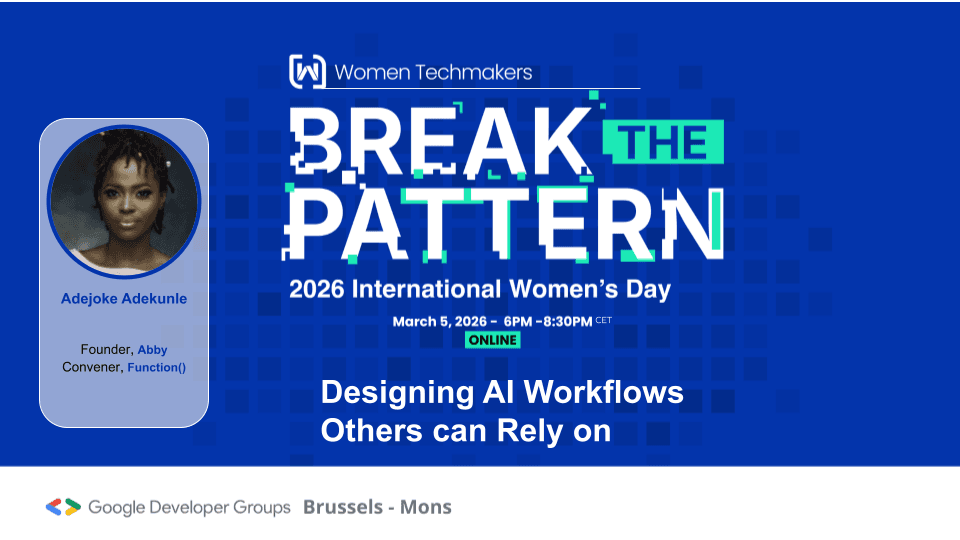
TLDR: I recently spoke on this topic at a Google Developer Group event in Brussels. Most people build AI tools for themselves and then wonder why no one else uses them. My talk focused on what actually changes when you build for a team, and how to get people genuinely on board. This piece highlights key points from my speech. See slides here.
——————————
Through my work helping teams implement AI into their workflows, I’ve observed a common scenario: someone on the team discovers AI, builds a few useful automations for themselves, gets excited, and starts showing people. And then, crickets. Everyone else is politely interested at best or mildly skeptical at worst.
The gap between building for yourself and building for a team is bigger than most people expect.
Here's what I've learned.
The difference between a personal tool and a team tool
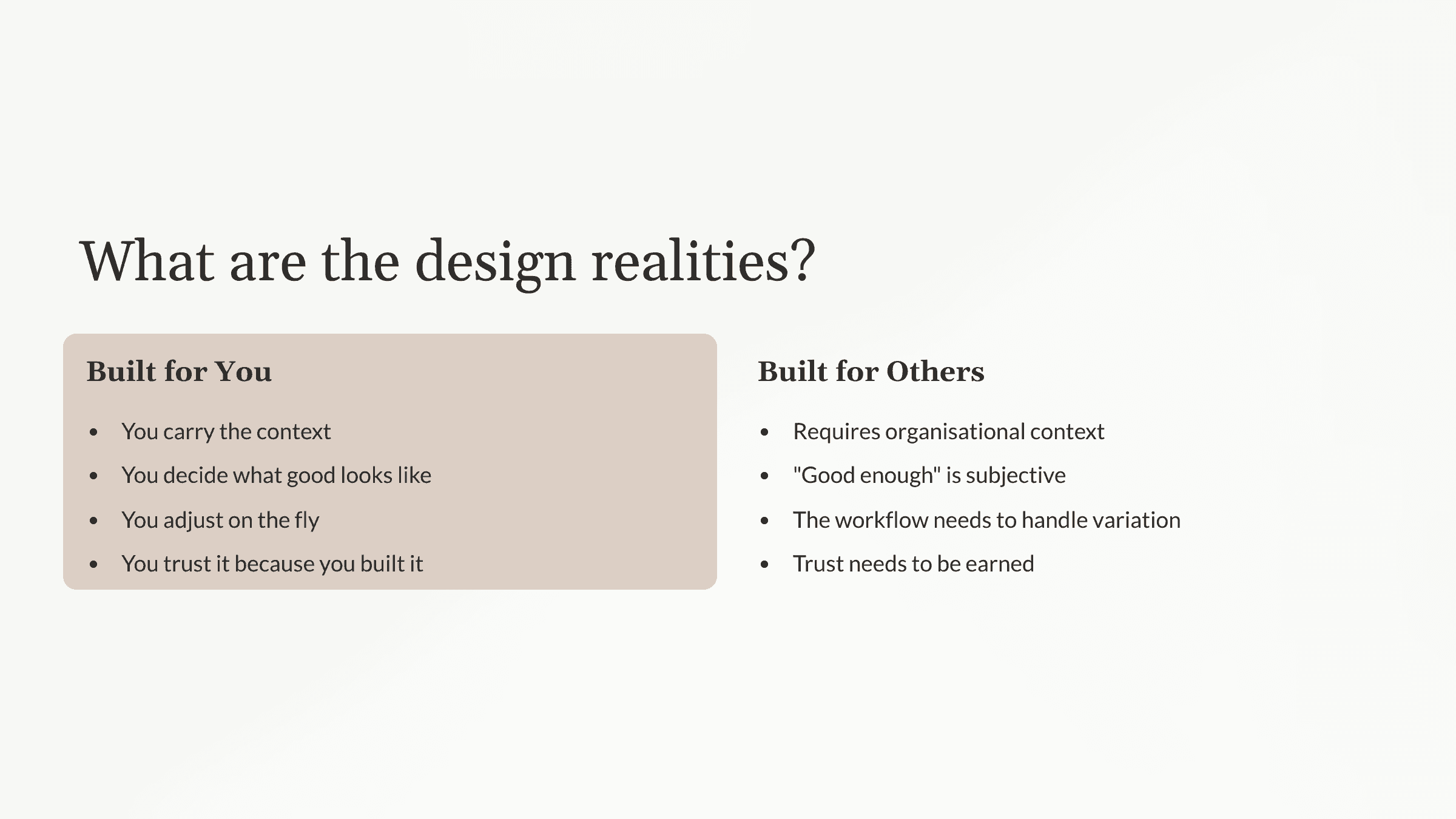
When you build an AI workflow for yourself, you hold all the context, you know what a good output looks like, and can adjust the prompt on the fly. If it breaks, only you notice.
That changes completely when others are using it.
A workflow built for a team needs organisational context baked in, not assumed. If you're using AI to generate content, a personal tool might have your tone in mind while a team tool needs to know the company's products, markets, customers, and what the brand actually sounds like. Without that, everyone gets inconsistent output and nobody trusts it.
Team workflows also need to handle variation. Different people will prompt it differently. They'll expect different outputs and will have different definitions of "good". If you don't set clear expectations and encourage a shared understanding of what “good” looks like, the feedback you get back will be all over the place, and you’ll struggle with adoption.
Start where it's low risk and high impact
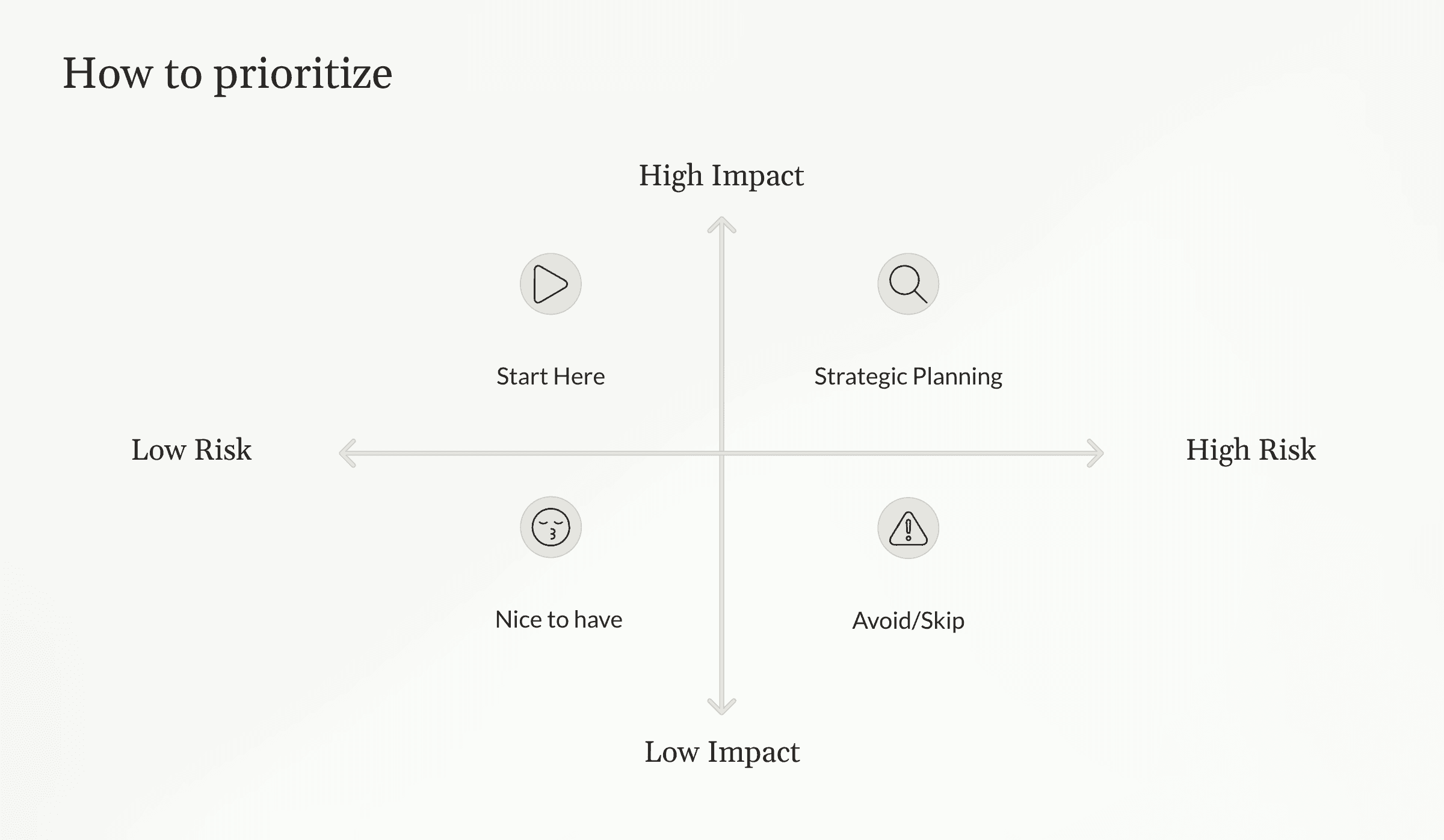
Before you decide what to build, you need to figure out where to play.
High-risk areas are anything that touches customer data, people data, or your company's core systems. Don't start there. AI tools still hallucinate and compliance questions are still being worked out. If something fails in a high-stakes area, it hurts the project and poisons the well for every AI initiative after it. Instead, find something that's genuinely painful, takes too much time, and doesn't involve sensitive data.
One example from my own work: A sales rep once mentioned that prospects would perk up whenever Glassdoor reviews came up in conversation but pulling relevant reviews for each prospect was taking them two days of prep time. I built a workflow that scraped Glassdoor, identified reviews where candidates complained about interview scheduling, and delivered a summary to the rep on demand. Something that took two days became a button click and worked with publicly accessible data. Within weeks, the entire sales team wanted it.
Stop selling the tool. Sell the outcome.
When you're describing what you want to build, forget the technology. Nobody in a business meeting cares about your workflow architecture or which AI model you're using.
They care about three things: is this cutting cost, increasing revenue, or saving time?
If you can't answer that question cleanly, the idea will be dead on arrival. You won't get buy-in. You won't get a senior sponsor. You won't get IT to cooperate.
Practice translating your tool idea into a business outcome before you pitch it. "We currently spend 10 hours a week on this. That's equivalent to X in salary cost. If AI handles it, we get that time back and can redirect it to higher-value work." That's the language that gets people to actually move.
Find a champion
Once you've built something worth using, your first instinct might be to announce it and wait for adoption. That rarely works.
What works is finding one person who's influential enough to make others care. They don't have to be senior, they just have to be someone people listen to. An influential person’s enthusiasm spreads faster than 10 Slack announcements from you, the builder with no clout.
Give your champion a win, let them demo what you built in their own words. Let them take some of the credit. If you're building tools for departments that aren't yours, you need someone inside that department who owns the narrative. You're not the hero of this story, and you don't need to be.
Address the anxieties before they become objections
Anxiety is perhaps the biggest thing that holds people back from adopting AI tools at work.
They're worried about looking incompetent if they use it wrong. They're worried about job displacement. Managers are worried about accountability if something goes wrong. IT is worried about data governance.
Most of the time, they're not saying any of this out loud. But it's shaping their behaviour.
When you're introducing a new workflow, name the concerns directly. Explain what data it does and doesn't touch. Be clear about what the tool can and can't do. And critically, keep humans in the loop, at least at first.
People mostly don't mind AI doing work, they mind feeling like they've been removed from the process, especially when they were not part-involved in building or setting up the tool. If they're still the ones reviewing the output, approving the next step, or catching errors, they feel relevant and this that matters more than you think. You also get better results when you involve subject matter experts anyway so, please, involve them.
The work doesn't stop when you ship
If you build something for a team, you're not done when it goes live. You need documentation, training, a way to handle feedback. You need someone (ideally not just you) who owns quality over time. You need to be ready to iterate as the tool gets used in ways you didn't anticipate.
A personal tool can be half-finished and still be useful but a tool built for a team needs to be reliable, or it loses trust quickly.
Two or three people can manage this if roles are clear. Someone owns quality. Someone owns maintenance. Someone handles failures. It doesn't have to be complicated. It just has to be defined.
If you've been sitting on AI workflow ideas but haven't figured out how to get your team on board, here's where I'd start: pick the most painful thing that doesn't touch sensitive data, frame it as a business outcome, find your champion, and build something small enough to actually ship. You can also use a tool like this that helps teams identify inefficient processes and recommends AI solutions. Once you and three other members on your team run the audit, you'll likely spot common bottlenecks and this makes it easy to take action towards eliminating those bottlenecks.
BONUS: Now everyone can build AI workflows
Yes, people pay me to help them implement AI but you don't need to wait for an expert to start embedding AI into your workflows. I'm a certified Gumloop expert and partnered with them to offer free credits for anyone to try their hands on AI workflows.
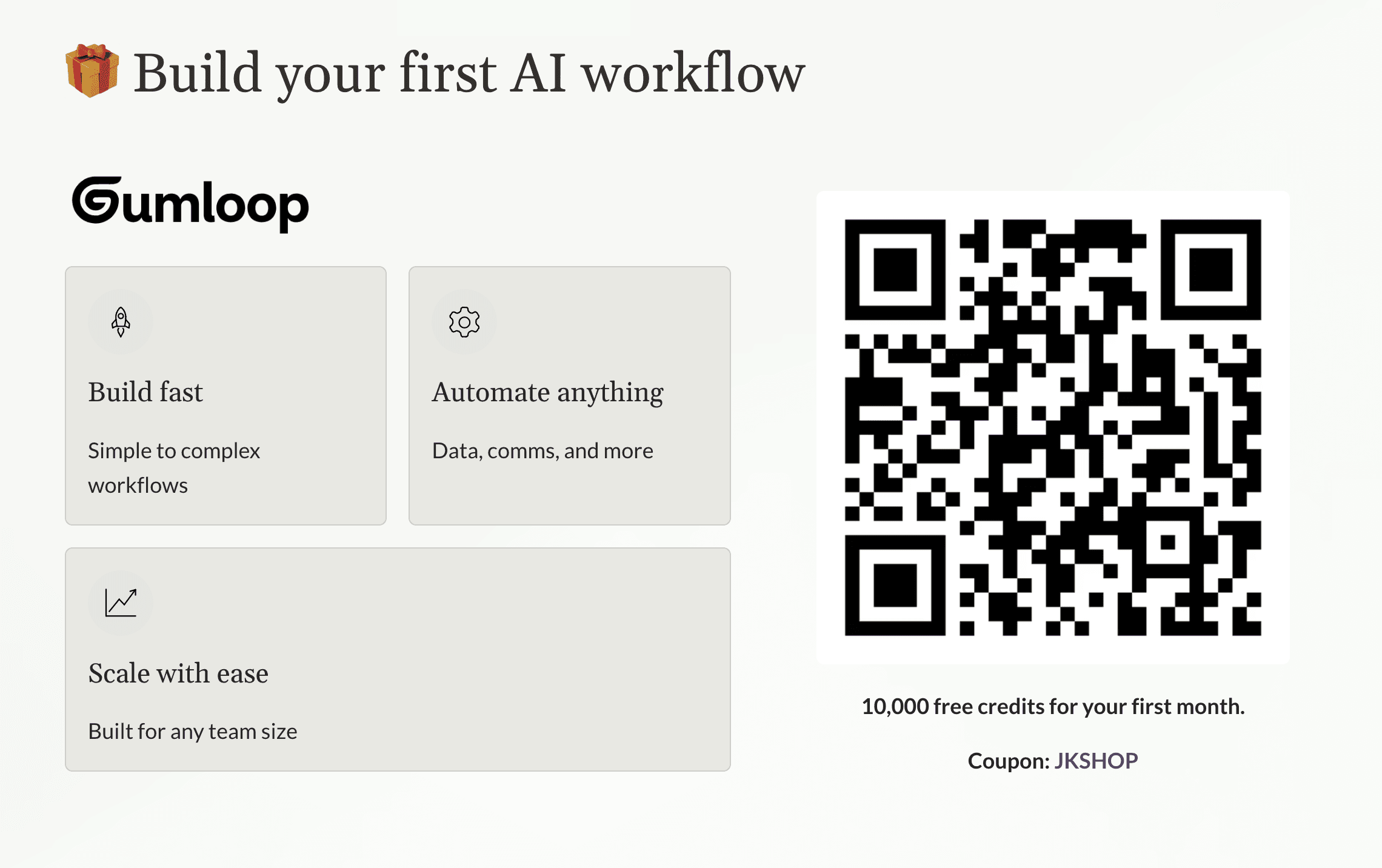
Coupon is valid till the end of March 2026 and gives you access to the Solo plan free for 30 days.
Watch the full session
Good luck!